Homer’s famous epic poem, “Iliad”, portrays the war between Greek and Troy, with many heroes— such as Agamemnon, Achilles, and Odysseus—appeared. Though these heroes’ stories are elaborated, certain hero’s role is neglected by Home: Menelaus is the greatest example, as Home barely described him in the fighting part even he is a steady fighter. Why homer makes Menelaus become “peripheral” in Iliad? After doing a detailed investigation, I believe that Homer wants to shape Menelaus into a character whose roles lay on a deeper level both to other characters in the Trojan War and to the audience. While Menelaus’s certain role, such as starting the war, is explicitly important in the Trojan War, he also plays some implicitly important roles that others don’t play, such as acting as a reflection/sign, a moral figure, and a connection of the war. This essay is going to explore both the explicit roles and implicit roles played by Menelaus in the Trojan war.
Some people may wonder who Menelaus is? Menelaus is the younger brother of Agamemnon who is the high king of the Mycenae and the commander of the Trojan War. He is the husband of Helen who is the direct cause of the Trojan War. He is the king of Sparta, where Helen’s father once ruled. He is also a brave and steady warrior who fights for Greeks without hesitation, though this characteristic is not as obvious as that is reflected on Achilles in the Iliad.
Menelaus’s first role is obvious: He is the launcher of the Trojan War. Previous to the content of the Iliad, Prince Paris from Troy stole Helen, Menelaus’s wife, from Greek. After realizing the betrayal of his wife, angry Menelaus convinced his brother Agamemnon to wage war toward Troy. The origin of the Trojan war then starts from Menelaus. However, Menelaus’s action plays another special role: it reflects a special Kleos ( Honor ) —the Kleos regarding family. In Greek, males view Kleos as the final thing they need to get even by going to die. I believe that the perfection and the integrity of the family belong to a part of a man’s Kleos. That a man can’t ensure the integrity of his house means that the man is useless, unattractive, and laughable, all of which are characteristics opposite to Kleos. Because Menelaus could not bear with such humiliation, he waged the Trojan war. Throughout the Trojan War, all other warriors’ Kleos center from killing enemies, while only Menelaus reflects both family Kleos issue and fighting Kleos. One thing to mention, although Agamemnon also received betrayal from his wife, it happens after the end of the Trojan war.
Besides, Menelaus actually contributes to the start and the success of the war from another aspect. When Menelaus was chosen to become the husband of Helen, he received a present from Helen’s father: that all other suitors should help and protect the husband of Helen at any cost, and should promise not to wage war against him. All other suitors agreed. Because of this agreement, powerful warriors such as Odysseus and Diomedes, along with their armies, join the expedition. Such powerful strength would make Greek’s success even more possible. In fact, for instance, if Odysseus hadn’t joined the Trojan War and hadn’t created the Trojan horse that can contain the army within its body, Greeks would not have sacked Troy that easily. Diomedes, under the help of Athena, killed dozens of Trojan heroes while also hurting the goddess Aphrodite who stands on the Trojans’ side. All of these contribute to the defeat of Troy. All of these reinforcements bring confidence to Menelaus and Agamemnon to launch the war.
In Iliad, Homer let Menelaus play a role more like a mediator of the war rather than a revenger who launch the war, as reflected in the duel between Menelaus and Paris. Specifically, Menelaus says, “I deem that the parting of Achaeans and Trojans is at hand, as well it may be, seeing how much have suffered for my quarrel with Alexandra’s and the wrong he did me. Let him who shall die, die, and let the others fight no more.”(Book 3) Menelaus is trying to solve the problem personally by only killing Paris through a duel instead of expanding the revenge action into a war. Menelaus is not a zealot of the war. I believe no one wants thousands of innocent people to die merely because of his issue with another person. At this time, Menelaus is more like a simple husband who merely wants to kill his wife’s lover.
However, the mediator role played by Menelaus is dimmed by so many elements. First, the gods’ interference makes his role become inferior. In essence, gods like Athena want the war to happen, so she templates Pandarus, a Trojan soldier, to shoot Menelaus to break the peace agreement. At the same time, Aphrodite, the goddess of love, prevents Menelaus from killing Paris, breaking the fairness of the duel. Second, most importantly, I believe all other Greeks warriors, even some of them feel terrified about the war before it happens, want to fight when the war actually begins. Even homer directly says, “both sides want the war to stop”, his descriptions of Greek warriors contradict with such will. The Achaeans sailing for Troy is similar to the gathering of ignited powder kegs that cannot be stopped. In Book 3, Homer says “Greek archers and slingers were taking aim at Hector and already starting to shoot arrows and stones when Agamemnon boomed out a command to hold fire.” This happened when Hector went out of Troy. Soldiers are supposed to listen to their commander’s order before starting a new wave of attack. However, the immediate attack shows Greek warriors’ passions to fight. In book 5, that Homers describes Soldiers as “stand tight without a flinch, as always” and “met Trojans without a tremor” shows Greek warriors’ readiness to fight. More importantly, Greek heroes also want to fight: Idomeneus, an advisor to Agamemnon and a courageous warrior says “there man’s courage is best decided, where the man who is a coward and the brave man show themselves clearly; the skin of coward changes color one way and another, and the heart inside him has no control to make him sit steady, but the brave man’s skin will not change color, nor is he too much frightened.” He is arguing that the war is the place to distinguish a brave man from coward, to bring honor to the right person. The passion for proving braveness and for getting honor makes these heroes actively engage in the Trojan War for ten years. In other words, the Greeks could not allow themselves to go home without any achievement. Consequently, no matter the duel happened or not, they would keep fighting till the end. Because of these beliefs, Menelaus’s role as a mediator of the war becomes even more inferior.
However, Because of the honor issue I mentioned above, I believe Menelaus’s role and the duel can be interpreted in another perspective: that Menelaus accepts the duel with Paris accidentally becomes the catalyzer of a more barbarous war and connect Greeks army and the Trojan war together. Previously, Greeks warriors may not have a personal connection with the war. Even Agamemnon’s aim is merely to revenge for his younger brother. However, when the Trojan side breaks the temporary peace agreement by shooting Menelaus, though manipulated by gods, Greeks will have a feeling of being offended. Suppose you are a soldier of county A and your county is having a war with country B. Two countries have reached a peace agreement. Suddenly, an assassin from B tries to kill your commander. What is your feeling? You must feel that your country has been humiliated as if country A is the weaker one that is naive and believes in peaceful agreement. With this feeling in mind, you will notice that the Greeks must be angry and are willing to make Trojans pay for their arrogance. Indeed, Agamemnon soon says “be man, my friends. Fight with valor and with a sense of shame before your comrades” (book 5) to encourage the army to fight more fiercely, for no Greek can bear with this offense. In short, Menelaus’s duel with Paris actually marks the official start of the Trojan war, with Greek warrior have a more personal connection with the war.
During the fight, Homer describes Menelaus more like a younger brother of Agamemnon and a moral figure that bring morale to other soldiers. The role of Menelaus officially turns into implicit. There is an article exploring the role of Menelaus in the Trojan War, while also analyzing the interaction and relationship between Agamemnon and Menelaus. According to Sammon, “Menelaus is more like a moral figurehead of the Achaean expedition, while Agamemnon acts as an army commander in chief.” (Sammon, 2009) Specifically, after Menelaus has convinced Agamemnon to conquer Troy, he seems to cede all authority over the expedition to his brother. He is not a member of Agamemnon’s inner council of foremost heroes, including Ajax and Diomedes. He also never speaks in the assembly where Agamemnon exercises his authority publicly. They seem to have no interaction. However, book 10 of the Iliad, according to the author, indicates that there are interactions that reveal the relationship between Agamemnon and Menelaus. First, that Menelaus wears a leopard skin while Agamemnon wears a lion skin shows that Menelaus is inferior to Agamemnon. Second, when both Agamemnon and Menelaus showed the feeling of terrified toward the conquer of the Troy, Nestor blamed Menelaus as a coward while praising Agamemnon as a wise man who considers every situation possible. It further indicates the inferiority of Menelaus. I realize that the role of Menelaus in the Trojan War is manipulated by Agamemnon instead of by Menelaus his own. Because Menelaus has already become a victim whose wife has been robbed by others, Agamemnon wants to use this characteristic of Menelaus as a tool to raise other heroes’ resentments and morale. It is similar to such a situation: by portraying a beggar as vulnerable and helpless, everyone will have sympathy toward him and is willing to help the beggar. This is the reason why Agamemnon delivers a lament speech to the public after seeing that Menelaus has been shot by Pandarus, a trojan. In order to maintain Menelaus’s identity as a victim, Agamemnon tries to push Menelaus back every time he wants to fight. Besides, through the conflict between Agamemnon and Achilles, we can know that Agamemnon is a person who favors absolute power. Consequently, Agamemnon will not allow Menelaus, his brother, to have the same status as him. The absence of Menelaus in most scenes is not because Menelaus is a coward, but because he is forced to be shaped as a coward by Agamemnon. The manipulation of Menelaus’s pubic image also indicates Menelaus’s younger brother role: that, as a younger brother, he should discuss everything with his older brother privately before putting it in front of public, while also should obey his older brother’s command. This article is significant because it explores deeply into the Agamemnon-and-Menelaus relationship that the book Iliad does not obviously state. It also explains the role of Menelaus plays in the Trojan War, as a younger brother and a moral figure. I realize that the bond between the brothers in the ancient Greek society is not that friendly and tight as I think. Besides, the warrior code that focuses on honor manipulates everyone’s behaviors at that time. Going back to the broader view, Menelaus’s function here is more implicit.
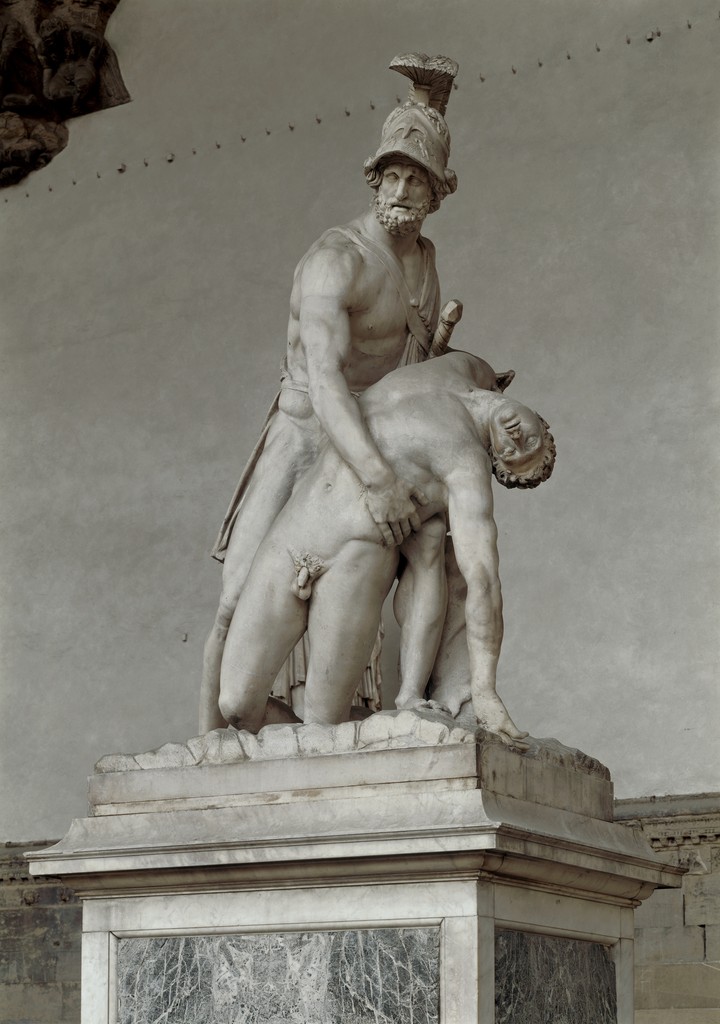
In book 17, that Homer let Menelaus become the defender of Patroclus corpse also has its won meaning: connecting the Trojan War and Achilles, the main fighter who contributes to Greek’s success, together. Strelow’s article tries to fully explain the role and character of Menelaus in book 17. In book 17, Menelaus is the first man noticing the death of Patroclus. As soon as he discovered it, he killed all the enemies who want to take Patroclus’s body, while asking Antilochos to bring news of Patroclus’s death to Achilles. Menelaus decides to return to the war zone instead of going with Antilochos. According to the article, Menelaus does this because of sympathy instead of glory, as Menelaus says the words like” painful message” and book 17 described him as” reluctant to leave.” Why homer singled out Menelaus for such extraordinary prominence? According to the author, there are two theories explaining this. The first explanation is that Menelaus is the only choice because other heroes, such as Ajax and Odyssey, are wounded. However, this does not explain why Aias is not chosen. The second explanation is because Patroclus and Menelaus are similarly gentle. Nevertheless, it fails to explain the central role played by Menelaus in this pivotal area. There is also an explanation saying that the ancient author likes to draw similar motifs from other poems: that Patroclus’s body is defended by Menelaus and Aias is similar to Achilles’s body is defended by Odyssey and Ajax in Aithiopis; It is a mere focus of certain character. All of these, according to the article, does not address the problem. In the author’s opinion, “Menelaus fulfills a pivotal function in mediating the two major themes of the poem: Achilles’s wrath and the Trojan War.”(Stelow, 2003) Menelaus is the central cause of this war and has an overriding concern about the prosecution of the war. However, Achilles has no reason to join this war previously until the death of Patroclus. By letting Menelaus defending the corpse of Patroclus, Homer draw Menelaus into Achilles’s story. Why that works? In my understanding, first: Patroclus is Achilles’s best friend so Achilles must value him deeply. Second, in Ancient Greek culture, if a warrior is killed, his complete corpse should be brought back to his homeland so that his family members or even citizens can bury him and lament for him. It’s another way to attain Kleos for that warrior. Combining these two reasons, that Menelaus defends the corpse of Patroclus means to preserve the honor of Patroclus and to respect Achilles as a friend, making Achilles feel moved. Consequently, Menelaus’s action plants the seed of Achilles’s decision to join the war. Two heroes who have different motives are now struggling toward the same outcome: conquering the Troy. The article is unique because it tells us that the chosen of Menelaus is not a random selection; it has its purpose, which is connecting two main themes of the Iliad. It explores one scene that one usually doesn’t care too much about, with innovative and persuasive reasons. In addition, I believe that protecting ally’s corpse is exceptionally important and that Patroclus’s body is defended by many heroes with high cost is one of the few unique cases. In conclusion, the role of Menelaus here is important in an implicit way.
In conclusion, Menelaus’s role is really contradictory in the Trojan War. He starts the war for a personal family issue. However, he later tries to mediate the war by having a duel with Paris while he seems to disappear in the latter part of the war. Nevertheless, it is just during this time that his role of importance turns from explicit to implicit. I believe Homer has his own purpose when describing Menelaus’s role. For example, he wants to use all other characters to reflect the main characters: Achilles, Agamemnon, and Hector. Consequently, Menelaus is more like a sign and a connection to the war.
Homer(N/A). Iliad.
Sammons, B. (2009). BROTHERS IN THE NIGHT: AGAMEMNON & MENELAUS IN. BOOK10. OF THE ILIAD. CLASSICAL BULLETIN, 85(1), 27–47.
Stelow, A. (2003). The “Aristeia” of Menelaos. THE CLASSICAL JOURNAL, 104(3), 193–205. published in March.2009

 trojanwar.music.blog